
Monday to Saturday - 8:00 -17:30
RV Plumbing System Basics: Simple Guidelines for Beginners

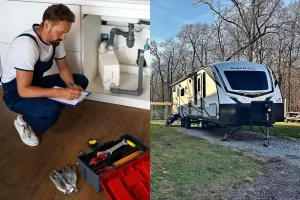
Everywhere you travel, your RV brings along its own little water world. It performs all the water-related processes like cleaning, cooling, draining, and storing within a tiny movable box. After figuring out how every single part works together, the entire water system turns out to be easy to control.
Consider this blog as your friendly and gradual guide to comprehending the entire system. We will guide you on the things to be inspected during your trips.
What Differentiates RV Plumbing From Home Plumbing?
RV plumbing is nearly similar to home plumbing, but it is smaller and more adaptable. It also has to work during travel. Also in campgrounds and when connected to different water sources.
Instead of using fixed pipes, RVs are fitted with lightweight plastic tubes. The system uses pumps instead of city pressure tanks. Additionally, it utilizes tanks for water storage instead of underground pipelines.
Here’s what makes it different:
| Feature | Home Plumbing | RV Plumbing |
| Water Source | City supply | Fresh water tank or campground |
| Pressure | Constant | Pump-driven |
| Pipes | Metal or PVC | Flexible PEX |
| Waste System | Sewer line | Grey and black tanks |
The Way You Get Clean Water in Your RV
Your RV is installed with two major sources of clean water: the freshwater tank or the city water attachment. The water pump is responsible for sending the water to the wash basin and shower. This enables a continuous flow even if there are no hookups. When you connect to city water at a campground, the pressure comes directly from the external line. To keep water safe, use:
- A white drinking-water hose
- A pressure regulator
- A filter at the connection point
Always monitor water levels. If the tank runs low, the pump may spit air. If you rely on city water, watch for high pressure. A simple regulator prevents leaks. Clean water starts with clean hoses and simple checks.
Do You Know Your RV’s Water Pump Type?
Most RVs come with a 12-volt diaphragm pump as standard. It activates when a tap is opened and deactivates when the tap is closed. The pump creates pressure in the pipes, which guarantees you a continuous flow.
Upgraded extra-silent models or variable-speed pumps are occasionally used in some RVs to achieve smoother water delivery. Typically, the pump is located close to the fresh tank. A good pump should:
- Run quietly
- Hold pressure
- Deliver at least 2.5–3.5 gallons per minute
- Shut off automatically
In case your pump generates pulses or emits strange noises, inspect for air leaks or filter blockage. By just cleaning, pumps can last for many years. Guarantee that the area is dry and secured. Use a fine mesh filter to prevent dirt from entering the pump.
How Tank Systems Are Used
Your RV generally has three main tanks:
- Fresh water tank: Stores clean water
- Grey tank: Holds water from sinks and showers
- Black tank: Stores toilet waste
Each tank plays a specific role. The fresh tank feeds the pump. The grey tank collects soap and food scraps. The black tank holds waste that must be dumped at a proper station. Keep valves closed until tanks are nearly full. It helps with better flushing during dumping. Here is a simple tank overview:
| Tank | Contents | Tips |
| Fresh | Drinking/shower water | Sanitize regularly |
| Grey | Sink/shower water | Add tank deodorizer |
| Black | Toilet waste | Use RV-safe toilet paper |
What are RV Water Filters and How Do They Work?
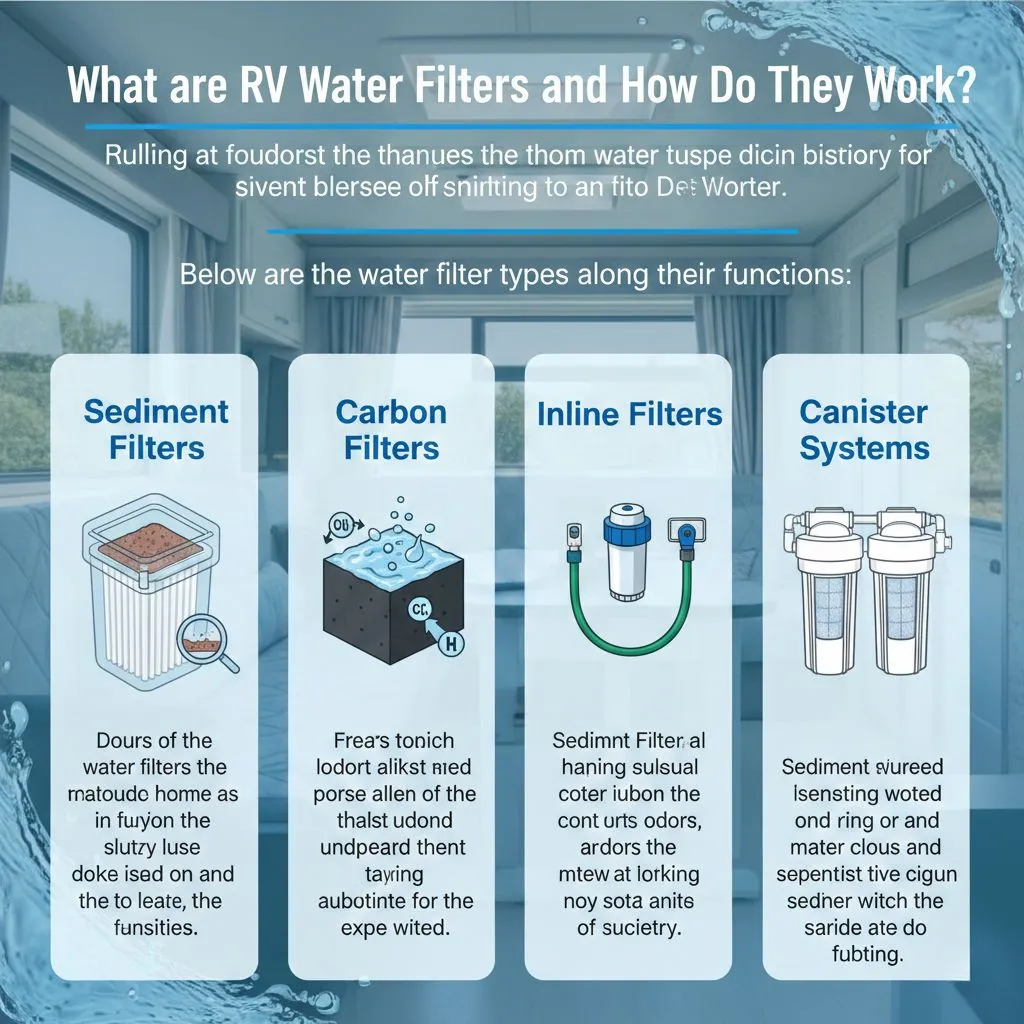
RV water filters are cleaning agents for your water, allowing it to be safe and even taste good. They act as a shield for your plumbing against dirt and unintended damage. Making use of the appropriate filter, you are able to avoid clogs and have the smell reduced.
Below are the water filter types along with their functions:
Sediment Filters
Sediment filters serve the function of catching sand, rust, and dirt before they enter your RV’s plumbing system. It protects the pipes and the pump against possible damage. Besides, these filters are highly recommended for campsites with water lines that are old and not very reliable. They ensure good quality water, both hygienically and practically.
Carbon Filters
Carbon filters are responsible for the removal of chlorine, odors, and strange tastes from the water. As a result, drinking water has a taste that is much cleaner and fresher. Besides, these filters are also responsible for the reduction of certain chemicals. They are the perfect choice if you want water with a better taste.
Inline Filters
Inline filters are small, uncomplicated, and really easy to install on your hose. They provide dirt and bad taste protection at a basic level. They are the go-to option for short trips or light filtering needs. The affordability and convenience of these filters are the main reasons why many RVers use them.
Canister Systems
Canister systems come with the option of stronger filtration, along with the flow cartridges that can be replaced. You are free to select between sediment, carbon, or specific filters depending on your requirements. They are able to cope with stronger water flow and give a more comprehensive cleaning. These systems are ideal for full-time RV travelers who prioritize top water quality.
Simple Steps to Sanitize Your RV Water Tank
Sanitizing is the process that eliminates bacteria in the water. It makes it safe for consumption. It is a good idea to perform this practice every few months, especially when strange smells are noticed.
Learn these easy, simple tricks:
- Empty the tank all the way.
- Mix a sanitizing solution with 1/4 cup of household bleach per 15 gallons of water.
- Pour the bleach mixture into the tank.
- Run water through all faucets until you smell bleach.
- Let it sit for 8–12 hours.
- Drain everything.
- Refill with fresh water and flush until the smell is gone.
If you prefer a less powerful method, RV-safe tablets can be used as an alternative to bleach. An odor-free tank also means healthy plumbing. It can be made possible with the sanitizer quite easily.
Tank vs. Tankless Hot Water Systems in an RV
RV water heaters come in two styles: tank heaters and tankless heaters. Each has benefits depending on how you travel.
Tank heaters:
- Hold 6–10 gallons
- Use propane or electronics in your RV to heat water.
- Provide steady but limited hot water
- Need recovery time between showers
Tankless heaters:
- Heat water on demand
- No waiting time
- More energy-efficient
- Sensitive to water pressure changes
In case you want to heat your water using a tank heater, it is going to be easier to maintain and more suitable for basic camping. On the other hand, a tankless heater will allow longer showers but will require stable pressure during operation. Select the system that suits your travel habits and the access to your campground.
How to Properly Connect to a Campground Water Supply?
The process of connecting to a water line in a campground is simple. However, you need to be mindful of your RV. Always use a pressure regulator at the start. Some places have really high pressure. Your lines can get damaged.
Use a water filter to ensure clean water. The first step is to attach the regulator to the faucet. The next step is to connect the white freshwater hose. If you wish to have extra protection, you can add an inline filter. The hose is then connected to the city water inlet of your RV.
Then slowly turn on the water and do not forget to look for leaks. A garden hose should never be used. Only hoses for drinking water should be installed. If the pressure feels too strong inside, just change to a stronger regulator.
Winterizing Your RV Plumbing System
Winterizing is a process that protects your plumbing system from freezing. The freezing of water results in cracks and leaks, which damage the RV system. So, if you are parking your RV in a cold place, winterizing is a must.
The basic steps for winterizing are:
- Drain all the water tanks
- Open the faucets to let out the pressure
- Use compressed air to push out any remaining water
- Pour RV antifreeze into the drains and the water pump
RV antifreeze is safe for use in plumbing systems and is non-toxic. Do not use typical car antifreeze. When spring arrives, flushing the system and replenishing water is necessary. Winterizing eliminates the costs and reduces the occurrence of major repairs.
Common RV Plumbing Problems and Quick Fixes
Even a well-maintained RV can face simple problems. However, it is good to know that a lot of the problems come with easy solutions. Some common problems include:
- Low water pressure: Your water filter or pump strainer might be the reason for low water pressure. To bring the water back, clean or change them.
- Pump running nonstop: A leak or a loose fitting can be the cause. Go around checking connections and tightening them.
- Bad smells: Deodorizing your grey tank and applying a freshener will help. If odor persists, rinsing the lines is your best bet.
- Slow drains: An RV-compatible drain cleaner is the best option. Using harsh chemicals that make the pipes weaker is a totally bad idea.
- Leaks at fittings: You can either tighten the connection or change the washer. Most of the time, small water leaks just need simple fixes.
Essential Tools for RV Plumbing Repairs
Taking a small toolkit on trips means you are always ready for the unexpected. You do not need advanced tools, but merely the basic ones. Keep them where you can reach them easily.
Here are the most necessary RV plumbing tools:
- Adjustable wrench
- PEX crimp tool
- Screwdrivers
- Teflon tape
- RV-safe sealant
- Extra washers and O-rings
- Flashlight
- Bucket and gloves
Conclusion
An RV plumbing system that is properly maintained will give the traveler the opportunity to have an easier and more relaxing trip. You can always avoid serious issues by doing routine checks. Consistency and cleanliness are key to protecting your RV system. When your plumbing is running smoothly, every mile feels effortless. It makes your RV journey feel like a rolling paradise!
Frequently Asked Questions
Can I fix my RV with plumbing supplies from my house?
Yes, you can use house plumbing supplies for minor fixes. However, RVs require specific fittings. To avoid problems over time, use RV-specific parts.
How much water do I need for a weekend RV trip?
A small family of two or more people usually needs 15–25 gallons for basic use. This includes cooking, washing hands, and quick showers. If you take long showers, you may need more.
Is it safe to drink water directly from the RV hose?
Only if a white drinking water hose is used. Additionally, add a filter to safeguard your system and enhance flavor.
What indicates that your plumbing needs expert care?
If you notice recurring leaks, unpleasant smells that won’t go away, a pump that never turns off, frozen lines, or water stains inside the RV, call an expert.