
Monday to Saturday - 8:00 -17:30
How to Increase Airflow in an RV: Effective Ventilation Tips

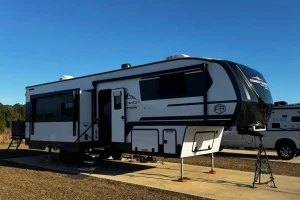
Stepping into a stuffy RV can ruin the mood of any trip. Heat builds fast, and air feels heavy in small RV spaces. Even strong air conditioning may not feel enough. Good airflow can solve these problems and keep temperatures balanced. It pushes out thick air and makes your RV feel fresh even when stored.
In this guide, we will explore the easy ways to increase RV airflow that do not involve hassles or heavy costs. Achieve a cooler and healthier RV experience with the right ventilation habits and small adjustments.
The Importance of Proper Airflow in an RV
Airflow is a factor of major importance in an RV, even more than in a house. As the area is limited, the air gets damp very quickly. Activities like cooking and showering also contribute to air humidity.
Letting air distribute poorly can lead to the following issues:
- Musty and unpleasant smells
- Condensation on window surfaces
- Giving rise to mold and moisture
- Feeling of fatigue or even dizziness
- Overworked cooling systems
Airflow is not optional in an RV. It is a daily comfort need. Good airflow helps regulate temperature. It keeps the air fresh and breathable and protects your interior materials. More importantly, it makes RV living healthier.
The Role of Open Windows in Better RV Airflow
Windows are the simplest airflow tool you have. Many RV owners forget to use them correctly. Opening just one window helps a little. Opening two or more creates movement. Even a small window gap can help. It lets stale air escape slowly. Fresh air comes in naturally.
The weather is also important. Open windows early in the morning. Close them during peak heat. Reopen in the evening. Here are some additional tips that enhance airflow through windows:
- Open windows on opposite sides to create cross ventilation
- Angle windows toward the wind when parked
- Use window rain guards so you can open windows during light rain
- Clean window tracks to help windows open fully
- Remove blocking elements like storage bins or decor
- Use clip-on or mounted fans to pull air in or push it out
- Open windows slightly while driving slowly to release trapped heat
- Park to ensure windows face shaded areas when possible
- Combine window airflow with roof vents for better circulation
- Use light-colored curtains that allow some air movement
How Roof Vent Fans Improve RV Ventilation
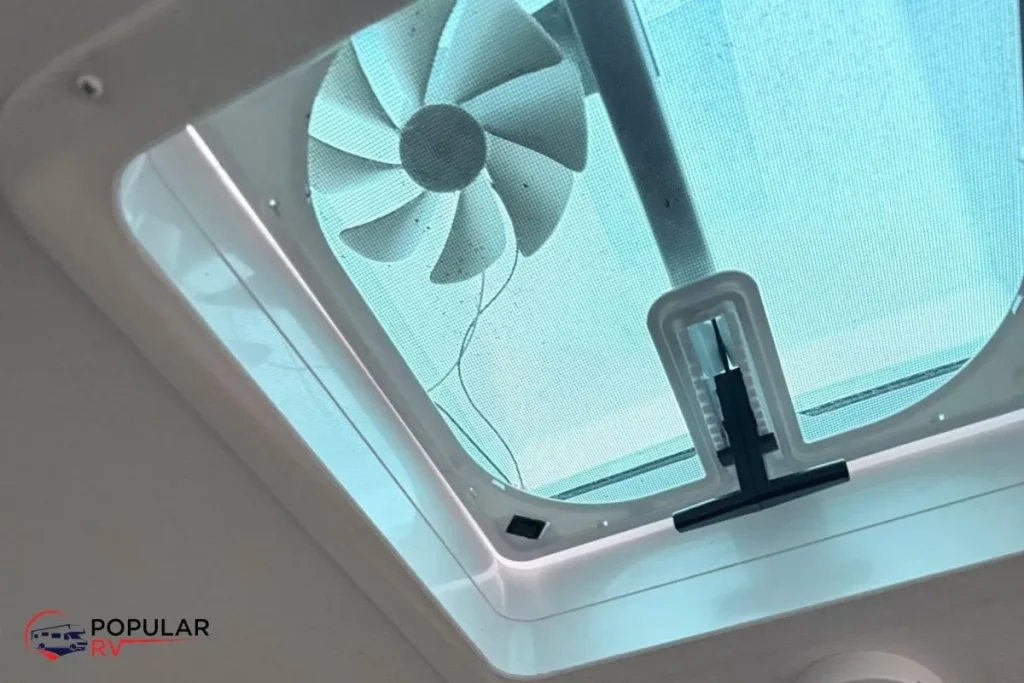
Roof vent fans are powerful tools. They take advantage of the natural circulation of heated air upwards and outwards. Highlights of roof vent fans:
- Removes heat fast
- Reduces cooking smells
- Controls moisture
- Improves air circulation
Roof fans are most effective when the windows are open. They, along with the windows, produce a constant flow of air. Typically, every RV comes equipped with a basic roof vent. Changing the vent to a better one may have a greater impact. Fan settings that can be changed in both directions also offer more power.
Common features to look for in a roof vent fan:
| Feature | Why It Helps |
| Variable speed | Better control |
| Rain cover | Use during storms |
| Quiet motor | Better sleep |
| Thermostat | Auto temperature control |
How to Keep Airflow Efficient While Cooking
Cooking generates heat and moisture. In a compact RV, it rises very fast. If there is no good ventilation, the odors and steam from the food can linger for longer. To improve the airflow, first turn on the fan of your chimney hood before cooking. Let it operate throughout the cooking process and turn it off a few minutes later after you finish.
Opening a window that is closest to your kitchen allows for fresh air to come in while hot air goes out. Using pot lids is also great because they can cover the dishes and also block the steam. Besides, they can limit frying odors and grease from spreading.
The best-case scenario is to cook outside. Induction cooktops are easier to carry and generate less heat compared to gas stoves. Opening the window or using the fan are very simple practices that can help keep steam and grease from circulating in the RV.
Ceiling Fans vs. Portable Fans: Which Works Better?
Fans do not create fresh air. Instead, they move existing air. Still, they help a lot. Ceiling fans are fixed in position. They move air evenly. Portable fans are flexible. You can aim them where needed. Here is a simple comparison:
| Feature | Ceiling Fan | Portable Fan |
| Installation | Permanent | No install |
| Coverage | Whole RV | Single area |
| Airflow | Even flow | Directional |
| Power Use | Low | Low to medium |
| Flexibility | Limited | Very high |
| Best Use | Daily airflow | Hot spots |
| Storage | Built-in | Needs space |
| Cost Range | Higher | Lower |
Ceiling fans work best for steady, everyday circulation. Portable fans shine when you need airflow in specific areas. Using both together creates better airflow throughout the RV without extra effort.
Natural Ventilation Ideas for Boondocking Trips
When boondocking, power is limited. That is why natural airflow becomes important. Try parking smartly. Position your RV to catch the breeze. Face windows toward the wind direction. Night airflow helps too. Temperatures drop after sunset. Open windows slightly to cool the space.
Natural ventilation costs nothing. It only needs attention and timing. Here are some extra guidelines for natural ventilation:
- Open roof vents during the day
- Park in shade when possible
- Open doors briefly to refresh air
- Close windows on the sunny side
- Open cabinets to let air move inside
- Lift bed panels for hidden airflow
- Let in air in the bathroom and kitchen regularly
- Avoid blocking vent openings
Best Way to Arrange Furniture for Better Airflow
The position of the RV furniture in a room has a bigger role in the airflow. Hot air mixes with the cooler air when the vents are blocked. It forms areas in the room where no air is circulating. Covering windows stops fresh air from moving through the RV. Even small items can reduce circulation if they are set in the wrong place.
A few furniture adjustments can greatly improve how air moves inside your space. Follow these rules:
- Keep vents free of barriers
- Leave space near walls
- Avoid heavy curtains near vents
Start by keeping all vents fully clear. For the sake of a free airflow, it is best to keep a small gap between the walls and furniture. It is also advisable not to use heavy drapes or thick cloths next to the vents. Sofas or chairs should be positioned at a little distance from the windows.
Also, ensure that you do not block under-bed vents with storage boxes. Try to keep them open instead. A clean and open arrangement of furniture allows gentle airflow throughout the RV. It helps to maintain a comfortable living environment.
How to Clean and Maintain Vents in an RV

Unclean vents decrease the airflow drastically. The dust is the one that prevents the air from flowing. The grease is the one that keeps the smells. Regular cleaning prevents damage from happening in the long run.
Clean vents every few months. In case you are a full-time traveler, then clean them more often. Check roof vents as well. Leaves, bugs, and debris often block airflow from above. Follow these basic vent cleaning steps:
- Remove vent covers
- Brush off loose dust
- Wipe with a damp cloth
- Use mild soap for grease
- Let vents dry fully
Regular vent maintenance keeps air moving the way it should. It stops small problems from growing into expensive repairs. You can catch damage early. You can also make sure vents open and close smoothly. This simple checklist helps keep your RV ventilation working well:
- Inspect seals for cracks
- Tighten loose screws
- Replace broken covers
- Clear debris after storms
Some helpful vent cleaning tools:
- Hand vacuum or brush attachment
- Soft microfiber cloth
- Mild dish soap
- Small scrub brush or old toothbrush
- Screwdriver for vent covers
Early Warning Signs of Weak Airflow
The occurrence of weak airflow is very rare, but it does not happen all at once. At the beginning, RV has very small signs, and these are usually very easy to miss. But they are very important to notice. It is crucial to detect the airflow problems early, before bigger ventilation issues arise later on.
Rooms Feel Uneven in Temperature
One area of your RV may feel hot while another feels cool. This is a common sign of weak airflow. Air is not circulating evenly. Hot air gets trapped in corners. Cool air stays near vents. When this happens often, airflow is likely disrupted or poorly directed.
Odors Linger Longer Than Normal
Cooking smells or bathroom odors should fade quickly. If they stay for hours, assume that the airflow is weak. Fresh air is not moving in. Stale air is not leaving. This often means vents are blocked. It also indicates that fans are not working properly.
Windows Collect Moisture Often
Continuous condensation on windows is considered an indicator. Damp air is caught indoors. It has no place to go. Lack of circulation leads to the growth of humidity. If overlooked, this can result in mold growth. Proper airflow lets water vapor escape before it becomes a problem.
Heavy Air and Weak Cooling
The air may feel thick even when fans are running. You notice fan movement, but feel no relief. The RV still feels warm and uncomfortable. This means air is circulating, but not refreshing. Hot air is still stuck inside the RV. Cool air may not reach all areas. Poor airflow direction is often the cause.
Vents Make Noise or Blow Weakly
A noisy air conditioning system and weak air flow from the vents are some indications of blockages in the air duct system. Dust or dirt may be the reason for the blockage. The covers of the ducts might be loose. These minor signs are often the beginning of common RV issues becoming severe.
Ventilation Tips for Extreme Weather Conditions
Extreme weather can make RV airflow tricky. Heat, cold, or moisture affects comfort. Adjust air gaps and windows for each condition. These tips help keep air moving and protect your RV no matter the weather:
- Hot Weather: Open roof vents early. Block sun-facing windows. Vent heat before midday buildup starts.
- Cold Temperature: Adjust vents slightly. Prevent moisture buildup without losing too much indoor warmth.
- Rainy Days: Use vent covers. Keep airflow active while protecting the interior from leaks.
- Humid Weather: Vent frequently. Reduce condensation by moving moist air outside quickly.
- Windy Days: Open windward windows. Control airflow to avoid drafts and pressure imbalance.
- Dusty Areas: Limit window opening. Rely on roof vents to keep dust out.
- Snowy Weather: Clear roof vents. Allow minimal airflow to prevent condensation and stale air.
Quick Vent Upgrades for Big Results
Small vent upgrades can make a big difference. You do not need major changes. These simple steps improve comfort and keep your RV fresh:
| Upgrade | Before | After |
| Replace old vent covers | Cracked, blocked airflow | Smooth, clear air movement |
| Install clip-on fans | Limited air direction | Targeted airflow to problem areas |
| Install low-profile attic vents | Heat builds under the ceiling | Hot air escapes faster, cooler cabin |
| Add vent filters | Dust and pollutants enter easily | Cleaner air inside, less dust buildup |
| Use adjustable vent deflectors | Air goes unevenly | Directs airflow where you need it |
| Upgrade to solar-powered vent fans | Dependent on electricity | Air moves anytime, even off-grid |
| Add small door vents | Rooms feel stuffy | Air flows between compartments |
| Install ceiling vent boosters | Fans alone feel weak | Stronger airflow, even in far corners |
Conclusion
Enhancing RV airflow does not require sophisticated systems. Surprisingly simple practices bring about great results. Begin with the least possible. Change it gradually during your journey. Continuous airflow within your RV will make it feel much fresher, cooler, and more habitable wherever the wanderlust may take you!
Frequently Asked Questions
Can I improve airflow without using electricity?
Yes. Open the windows to provide cross ventilation. Use roof vents without fans. Take a trip to the park to enjoy the fresh air.
Are solar fans useful in improving airflow?
Sure. During the day, solar fans help remove heated air. They don’t need a charge and function best in sunny locations.
How can I maintain airflow in winter?
Open vents slightly. Do not completely seal the RV. This regulates moisture and prevents condensation.
Is it safe to leave roof vents open while driving?
Only if the appropriate vent covers are installed. Rain and wind can cause damage if there are no covers.