
Monday to Saturday - 8:00 -17:30
Basic RV Electrical System: Understanding Batteries, Inverters, and More

Your RV carries more than furniture and gear. It carries a complete electrical setup that powers your entire journey. The good news? You do not have to study engineering to understand it. Merely a handful of details will be sufficient for you to manage outages and quickly take care of your system.
In this blog, we will simplify the essentials, such as batteries, inverters, breakers, and so on, to ensure your every road trip is hassle-free.
How Does the Electrical System in an RV Function?
The electrical system of an RV operates through two different types of power sources: 12-volt DC and 120-volt AC. DC power is the type of power provided by RV batteries. It supplies power to the lights, fans, water pumps, and detectors.
AC power, on the other hand, is derived from the utility power or a generator. It powers up the microwave, TV, air conditioning units, etc. The system is smart enough to switch over sources automatically.
While plugged in, your RV will make use of the shore power, and battery charging occurs in the background. Also, when unplugged, the system will use the battery.
An AC is generally converted to DC through a converter. In contrast, an inverter changes DC into AC. Everything is interdependent, and therefore, all these components work together to give power to your RV regardless of its location.
Understanding AC vs. DC in Your RV
Your RV uses both AC and DC power because different devices need different forms of energy. DC is low voltage and stable. It is ideal for small devices and essential systems.
AC is high voltage and powerful. It supports larger appliances and anything with heating or cooling elements. The table below shows typical uses:
| Power Type | Voltage | Common Uses |
| DC | 12V | Lights, fans, water pump, USB chargers |
| AC | 120V | Microwave, TV, outlets, air conditioner |
You must learn the dissimilarities to quickly solve issues. In case your lights are out, it could be a DC problem. If your microwave is not functioning, it might be an AC problem. A proper understanding simplifies the road experience.
RV Batteries and Their Role in Your Power System
Batteries for RVs are like the power plants of an off-the-grid electricity system. They accumulate power and convert it into 12-volt DC usable by most appliances in the house. Power ascending from them is lights, water pumps, vent fans, and control systems.
Three major types of RV batteries are available on the market: lead-acid, AGM, and lithium. All differ regarding their lifespan and charging requirements. Batteries also must be constantly observed. Check if the terminals are corroded. Try to keep the battery charged. Never let it run out of power. A durable battery enables your RV to travel along every road of adventure.
Below are a few easy ways that you can do to prolong the battery’s lifespan:
- When not in use, keep the batteries completely charged.
- Get a smart charger that will take care of the charging so it will never be overcharged.
- Avoid overheating your batteries strictly.
- Turn off and unplug the devices that are not in use.
- If your RV will not be used for an extended period, then use solar panels for slow trickle charging the batteries to maintain their full charge.
How Inverters Transform DC Power Into Practical AC
When an inverter is used, AC appliances can be run without being connected to the main power source. It transforms the 12-volt DC power from the battery into 120-volt AC power. It runs off-grid laptops, kitchen appliances, or TVs, etc.
The two categories of inverters are: modified sine wave and pure sine wave. But, there is one drawback, that inverters discharge batteries fast. So, monitoring the battery when in use is a must.
Some RVs have an inverter built in. Other RVs require manual installation of an inverter. They are user-friendly and will help you enjoy camping without discomfort.
How to Safely Connect Your RV to a Campground Power Supply?
It appears connecting your RV to campground power is a simple task, but doing it safely is crucial. A correct hookup not only protects your equipment but also eliminates the risk of fire. Always obey these detailed instructions for safe use:
- To begin with, deactivate the main circuit breaker for your RV.
- Look at the power box for any signs of trouble or overheating.
- Check that the connection is appropriate for your RV’s amperage (30A or 50A).
- Use a surge protector before connecting to avoid sudden voltage spikes.
- After that, reverse the pedestal breaker on.
- Finally, turn the main circuit breaker of your RV on.
Do not ever try to insert a plug into a socket that it does not fit. If the socket is coming loose or it gets hot, inform the staff at the campground.
All About Extension Cords and Adapters
The extension cords and adapters for RVs are very handy in linking your RV with different electric sources. But make sure you only use the heavy-duty ones that are capable of carrying your RV’s amperage.
A standard household cord and adapter will not be enough. There is a risk of overheating and damaging the RV. Remember that whenever you use an adapter, there is always a power limit.
Always keep your cords flat and without any entanglements. Inspect cords for any areas with missing insulation. Always confirm that connections are dry. Simple measures will go a long way in preventing the risks of shocks and overheating.
Which Role Do Fuse Boxes and Breakers Play?
Both fuses and breakers are used in your RV to safeguard the electrical circuit against future problems. Each protects a different type of circuit and aids in the prevention of damage if something fails.
Fuses
The RV you own is equipped with a fuse panel, which is responsible for all 12-volt DC circuits. If the current flow through the wire exceeds certain limits, the fuse will be damaged. This circuit interruption will protect your lights, fans, and appliances from damage or overheating.
When something goes off, check the fuse first. Replace the blown fuse with the same specifications as the original. Make it a habit to keep the fuse panel clean and easily available.
Breakers
Along with the RV, there is a breaker panel for AC circuits of 120 volts. When a circuit exceeds power, the breakers go off. This is done to cut off power to the circuit. It prevents overheating or fire.
In case an outlet or appliance stops functioning, go to the breaker panel. You can easily reset the breaker to get the power back on. Make sure this panel is always maintained. Breakers are a daily protective measure for your AC system.
How Solar Panels Can Boost Your RV Power?
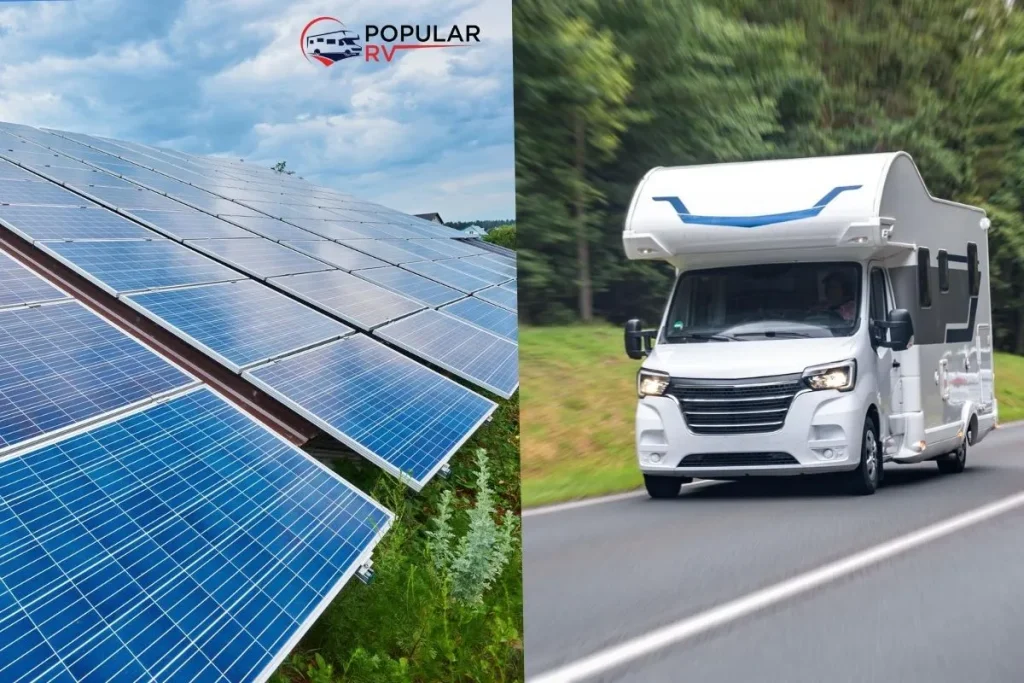
Installing solar panels means you will not have to worry about dying batteries and internet in your RV on your off-grid vacations. They use sunlight to produce DC power. It lessens the use of the generator and provides power that is also silent.
The components needed for any basic solar setup are panels, charge controller, wiring, and battery system. Having more panels implies having more power during sunshine hours. Major appliances like air conditioners cannot be run through solar directly, but it is still able to keep your batteries charged up, which is very beneficial.
You could either position fixed panels on your roof or opt for the portable ones. Solar panels are a very good investment. Besides, it is a necessity for the trips that are going to be very long.
Powering Appliances Safely in Your RV
Using appliances safely starts with knowing your RV’s power limits. Do not run multiple high-draw items at once. For example, avoid running the microwave and air conditioner together on high settings. Use only RV-approved power strips. Never use damaged cords.
Many RVers track their power usage with a simple chart. Some common examples are:
| Appliance | Average Draw |
| Microwave | 1000–1500W |
| Coffee Maker | 600–900W |
| Air Conditioner | 1200–1800W |
| Laptop | 60–100W |
| Space Heater | 1200–1500W |
| Hair Dryer | 1000–1600W |
| Toaster | 800–1500W |
| Electric Kettle | 1000–1500W |
| TV | 80–200W |
Simply turn off any unused items or unplug chargers. These are tiny habits that will help you to protect your system and also avoid overloads in general.
Basic Electrical Tools Every RVer Needs
Having the right tools makes fixing problems much easier. A small toolkit saves time during travel. Even if you are not an expert, these accessories help you handle simple issues quickly. Keep these items on your RV trip on hand:
- Digital multimeter
- Screwdriver set
- Electrical tape
- Spare fuses
- Wire cutters
- Surge protector
- Voltage tester
- High-quality extension cord
What Are the Most Typical RV Electrical Issues?
Every RV experiences electrical problems. The majority are simple to repair. These are the most typical issues:
| Problem | Simple Solution |
| Blown fuse | Replace with the same fuse rating. Check for overload. |
| Tripped breaker | Reset the breaker. Reduce the number of high-draw devices. |
| Loose connections | Tighten the connection or have it checked by a tech. |
| Weak or dying batteries | Recharge fully. Test battery health. Replace if needed. |
| Bad adapters | Replace the adapter with a quality, RV-rated one. |
| Unstable campground power | Use a surge protector or backup system. Avoid running big appliances. |
| Flickering lights | Check battery voltage and wire connections. |
| Dead outlets | Reset the circuit interrupter outlet. Check the breaker panel. |
| Burning smell | Turn off all power immediately. Inspect wires or get professional help. |
| Hot or melting cords | Unplug at once. Replace damaged cords and reduce load. |
Conclusion
The power system is the foundation of your RV, which functions quite similarly to a little house. Once you understand how it works, you can go camping anywhere with ease. Appropriately taking care of your electricity will lower potential risks, safeguard your equipment, and resolve problems more quickly. Just a few little secrets can transform your vehicle into a less dangerous, more dependable home on wheels!
Frequently Asked Questions
How long does a fully charged RV battery last?
A healthy RV battery can last from 24 to 72 hours, depending on usage. Typically, lead-acid batteries do not last as long as lithium batteries.
How do I properly winterize my RV’s electrical system?
Clean the connections, disconnect the battery, and keep it somewhere dry and cool. Switch off the breakers, and every appliance should be unplugged. Cover open ports to keep moisture out. These steps protect your system during cold months.
Can LED lights save my RV battery life?
Definitely. LED lights consume relatively little electricity and significantly lessen battery drain. They also last longer and generate less heat. Switching from incandescent to LED can double your battery runtime on some trips.
How can I prevent overloading circuits?
Recognize your amp limit. Avoid using several high-draw appliances together. Keep an eye on your usage and distribute the use of your appliances throughout the day.