
Monday to Saturday - 8:00 -17:30
Common RV Problems: Everyday Issues RV Owners Face

Having an RV means having the independence, excitement, and coziness during the trip. But this lifestyle also has difficulties. The RVs are always on the move, affected by the weather, and heavily used. If not taken care of, small problems can grow to be serious ones.
It is easier to take action if you know the possible issues. This blog will highlight the top RV problems that are most frequent. It will describe the reasons for them and teach you how to spot the signs even before they spoil the holiday.
Why Do RV Problems Happen So Frequently?
RVs are like moving houses. They combine driving systems, plumbing, power, and living space. All of this sits on one frame. Unlike regular homes, RVs face stress every mile. Most problems happen because of:
- Continuous vibration while driving
- Exposure to sun, rain, wind, and cold
- Long periods of storage
- Missed maintenance
- Overloading and poor setup
All of them work together while moving down the road. Vibration causes parts to loosen. Weather damages walls and roofs. Lack of regular checks makes problems worse. Many issues start small. They grow when ignored.
Common RV Driving, Engine, and Safety Issues
RV driving and engine systems face constant stress. Heavyweight adds pressure. Long drives increase wear. The RV engine works hard on every trip. Understanding these problems means you can locate issues earlier and practice safe driving on the roads.
Tire Blowouts and Uneven Wear:
RV tires carry heavy loads. More than car tires. Underinflation is a common cause of blowouts. Overloading makes it worse. Check tire pressure before every journey. Inspect sidewalls and replace old tires if needed.
Brake Problems:
Brakes work harder in RVs. Extra weight increases strain. Soft brake pedals are also a warning sign. Grinding noises in the pads and brake fluid leaks are serious. Brake issues reduce safety. That is why regular inspections are essential.
Engine Trouble:
Engines have a hard time if maintenance is neglected. Old RVs usually have the problem of overheating. Clogged filters make the engine work harder. Always pay attention to fuel or oil leak signs. Check them all at once to prevent getting stuck on the way.
RV Shake While Driving:
Shaking feels scary. It often points to a tire imbalance. Bent rims can also cause it. Old suspension parts add to the problem. Steering issues may follow. Fixing shakes early prevents further damage and improves comfort.
Worn Suspension Parts:
Suspension absorbs road shock. Over time, shocks and bushings wear out. You may notice bouncing or poor handling. Uneven tire wear often follows. Ignoring suspension issues also strains other parts of the RV.
Rust and Corrosion Under the RV:
Rust is a result of moisture. Road salt speeds it up. Rust weakens frames and supports. Underbody checks help catch early corrosion. Treating rust early prevents structural damage.
Overloaded Storage and Weight Balance:
Excessive weight can damage tires and brakes. Poor balance affects steering. Many RV owners overload without realizing it. Know your RV’s weight limits. Distribute cargo evenly.
Strange Noises You Should Not Ignore:
Warning noises can be rattles, squeaks, hissing, and clunks. Usually, they indicate loose parts, gas or air leaks, and faulty components. Overlooking strange sounds causes small issues to become big ones. Investigate early to avoid roadside failures.
Power and Electrical System Problems in an RV
Your RV’s electrical system powers comfort and safety. It runs lights, appliances, and essential equipment. Small issues often start quietly. These problems can feel confusing, but most have clear warning signs. A quick look at common RV electrical issues:
| Problem | Common Causes | Simple Solutions |
| Electrical Failures | Loose wires, blown fuses, and moisture corrosion | Tighten connections, replace fuses, keep areas dry |
| Dead Batteries | Old batteries, parasitic drains, lack of charging | Charge regularly, clean terminals, replace aged batteries |
| Lights Malfunction | Loose wiring, poor grounding, aging bulbs | Secure connections, improve grounding, switch to LED lights |
| Inverter Issues | Overloading, poor ventilation, incorrect wiring | Reduce load, improve airflow, check wiring setup |
| Charging Problems | Faulty alternator, solar controller issues, bad cables | Inspect charging sources, repair controllers, replace cables |
| Generator Problems | Stale fuel, clogged carburetor, long periods of no use | Use fresh fuel, run generator monthly, service regularly |
| Appliances Shut Down | Power surges, circuit overloads, wiring faults | Reset breakers, reduce load, inspect wiring |
| Refrigerator Issues | Blocked vents, unstable power, faulty sensors | Clean vents, stabilize power supply, service sensors |
Typical Water, Plumbing, and Tank Problems
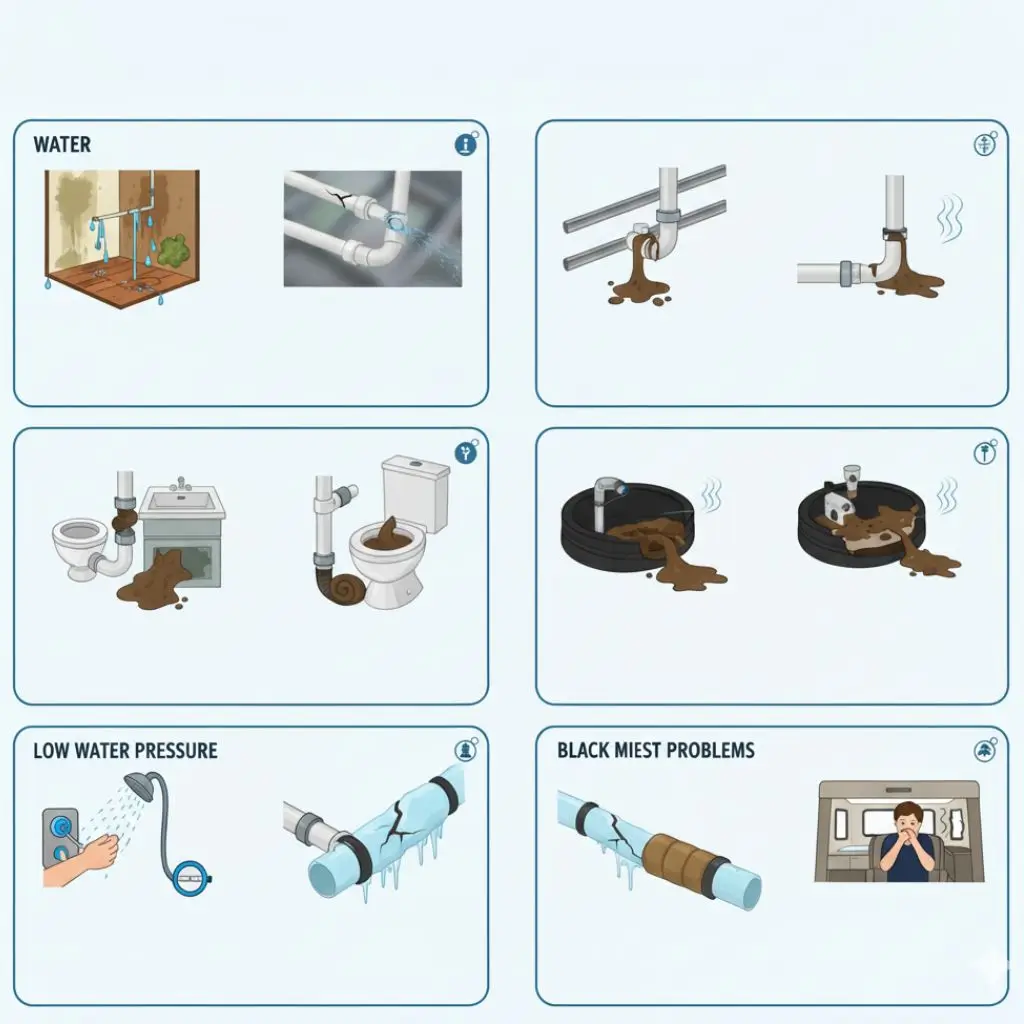
RV water systems may look simple, but they work hard. Pipes move even when you first time drive RV. Tanks fill and empty often. Pressure changes at every stop. Minor troubles can escalate to bigger issues. That is why learning about water and sewage tank issues is crucial.
Water Leaks:
Leaks hide behind walls and floors. Small drips cause big damage. Soft spots in flooring are a warning sign. Mold often follows unnoticed leaks.
Plumbing Problems:
Loose fittings cause sudden leaks. Plastic pipes crack under pressure. Vibrations loosen connections over time. To minimize surprises, try to check the plumbing system frequently.
Clogged Toilets and Slow Drains:
Incorrect waste breakdown causes blocked pipes. Too little water worsens the issue. Regular tank treatments help keep systems flowing.
Low Water Pressure at Campsites:
Low pressure may come from the source. It may also signal clogged filters. Pressure regulators protect pipes from damage.
Sewer Leaks and Connection Issues:
Loose sewer hoses leak waste. Cracked seals allow odors. Secure connections prevent mess and health risks.
Black Tank Problems:
Often, sensors give misleading readings. Buildup is the reason for odors. Clearing tanks on a regular basis helps them run smoothly. Strong chemicals should be avoided.
Frozen Pipes in Cold Weather:
Cold temperatures freeze exposed pipes. Frozen water expands, and pipes crack easily. Insulation and heat tape reduce risk.
Bad Odors:
Odors come from clogged pipes or dirty tanks. Roof vents may clog. Proper ventilation and cleaning help control smells inside the RV.
Structure, Exterior, and Weather Damage in RV
The outer shell of your motorhome is a shield protecting all the things in it. The sun, rain, wind, and small particles from the road are the culprits behind its slow deterioration. Eventually, they lead to major destruction.
Roof Damage from Weather
The roof of the RV is exposed to constant weather conditions, which may soon weaken the materials. The sun will dry out the surface, causing the roof to crack. Eventually, rainwater will sneak in, and the process of damaging the roof will slowly start. Getting the roof checked at least once a year will help you catch the early signs.
Cracked Window and Door Seals
The window and door seals decay and shrink over time. Their size is also reduced by the conditions outside, making them fragile. The tiny openings allow water, dust, and cold air to get inside. This results in leaks and poor insulation. Resealing the worn areas will improve the comfort. It also helps in the prevention of mold and damage to the interior.
Awnings Damage By Wind and Rain
Awnings are in their most vulnerable and delicate state when the weather is bad. Strong wind can either tear the fabric or break the support arms. Heavy rain stresses the situation and will lead the awnings to sag. They have a higher chance of tearing if they are left out during the storm. Also, retracting them in advance is the key to avoiding expensive repairs.
Slide-Outs That Don’t Work
Slide-outs are driven by motors, gears, and tracks. The movement can be blocked by dirt, debris, or rust. Bad alignment causes uneven sliding or a total shutdown. Overlooking one minor problem will cause a much bigger repair bill. Keeping the sliding mechanisms clean and properly lubricated ensures they continue to move smoothly.
Unclosed Storage Doors
The storage doors are always subjected to vibrations during the ride. The attachments gradually lose their firmness, and the frames shift slowly. Eventually, the doors do not fit and may not close well enough. It is a good practice to regularly tighten the hardware and make knob adjustments. Because they can restore the door to its proper fit and function.
Comfort, Climate, and RV Interior Problems
Stable temperatures are essential for comfort in an RV. Daily RV living is affected by heat, cold, moisture, and road movement. Small interior problems may sometimes develop slowly. If left undetected, they will diminish comfort along the way.
Air Conditioner Breakdown during Heat
The air conditioners during hot climate days have to work at their maximum. The air flow is slowed down. Additionally, the cooling is also reduced with dirty filters. The low power supply is also one of the reasons. Parts wear out over the years. Regularly cleaning the filters and checking the power sources helps ensure that the AC does not break down suddenly.
Poor Insulation and Temperature Changes
There are many RVs with poor insulation. The sun causes the outer surface to heat up and penetrate the RV easily. The cold night air then pulls the heat away from inside, and the process continues. This leads to irregular temperatures. Windows are a main cause of this problem. Adding window covers, rugs, and seal upgrades helps in controlling the temperature and overall comfort.
Mold, Pests, and Moisture Buildup
Moisture forms easily in tight spaces. Lack of airflow keeps humidity high. This creates a perfect spot for mold to grow and also attracts insects. A stale smell is a common first indication of this issue. Keeping the vents open, using fans, and dehumidifying will significantly help in maintaining a clean and healthy environment inside.
Interior Damage from Constant Vibration
Movement on the road shakes the RV all the time. It causes the cracks on the panels to appear, and the loosening of the cabinets and furniture. The screws will back out, and the joints will become weak. At first, this damage does not look very significant. If not fixed, the damage will spread. Regularly checking, installing supports, and tightening the fixtures will prevent damage.
RV Setup, Leveling, and Campsite Issues
Setting up an RV at a campsite takes more than just parking. Proper leveling means better relaxation and safer conditions. Very little carelessness can lead to the collapse of the appliance, misalignment of the door, or even dangerous situations.
Leveling System Problems at Campsites
Automatic leveling systems at camps are great, but they can fail. Sensors can get tricky, leading to uneven setups. Hydraulic leaks can also prevent platforms from going up or down completely. Always keep a manual backup nearby and perform inspections regularly. Knowing how to operate it guarantees that your RV remains stable and secure.
RV Set Up and Alignment Problems
Poor leveling affects both comfort and function inside your RV. Light fixtures won’t work properly, and doors or slide-outs can get out of place. Uneven RVs feel like they are about to fall over and can put a lot of pressure on the suspension. Leveling blocks or ramps can be used to resolve these issues. Being careful at every parking site prevents long-term damage.
Propane Leaks and Gas Smell Warnings
Leaks of propane create a great risk to safety. Leaks are usually caused by loose parts, broken hoses, or defective regulators. Gas detectors give warnings of the presence of gas, but rely on your nose as well. Immediately turn off all propane if you smell gas. Check the connections and call for service before lighting up the machines.
Conclusion
RV issues are frequent, but they don’t have to make your travels miserable. The majority of problems have early warning signs. Regular inspections can help detect problems early on. A well-maintained RV remains more dependable, comfortable, and safe. Knowledge of the common issues is your greatest weapon for relaxed and durable RV adventures!
Frequently Asked Questions
Are RV electrical problems serious?
Of course. Electrical faults can cause critical systems to fail. Fix them in advance.
How often should an RV be checked for faults?
Examine your RV before each journey. Every few months, do a thorough inspection.
Should new RV owners expect problems?
Yes. Small problems are frequent for new owners. Learning early helps them avoid major difficulties later.
Do RV problems get worse over time?
Ignored problems can become more severe over time. Frequent maintenance keeps issues minor and controllable.