
Monday to Saturday - 8:00 -17:30
RV Internet Options: How to Stay Connected While Traveling

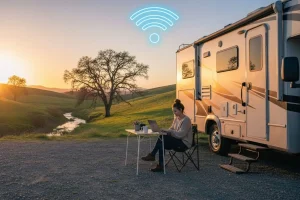
Life on the road is about new views, new places, and routines. However, one thing that people traveling by RV always need is internet access. Internet helps you stay connected to the world while enjoying adventure.
But RV internet is not the same as home internet. Signals change, and speeds vary. Some places have strong coverage, while others have none. That is why choosing the right RV internet option matters.
This guide covers all the primary RV internet options. You will understand how each option operates, its advantages, and disadvantages.
1. Cellular Data Internet for RVs
Cellular internet is the most popular option for RV travelers. It works using mobile phone networks. If your mobile phone has reception, you can most likely have internet at that location. It is a good option in urban areas, small places, roads, and some camping sites.
Deep woods, desert lands, or mountains are locations where it is not that reliable. Because it is simple to install, many RVer personalities switch to cellular Internet at first. If it becomes absolutely necessary, an option may be switched later. RV cellular internet options include the following types:
Mobile Hotspot Devices
A mobile hotspot is a tiny gadget that utilizes mobile data to set up a Wi-Fi network. It is possible to connect any cell phone, laptop, or tablet to it. Such devices are easily carried around and are also easy to use.
They are best suited for light to moderate use. Their performance is good for browsing and making video calls. Here are the benefits of choosing them:
- Separate the device from your phone
- Better battery life than phones
- Can connect multiple devices
- Supports large data plans
- More stable connection than phone tethering
- Designed to stay on for longer hours
Mobile hotspot gadgets might get cut off in rural or countryside locations where the nearest cell tower is too far away. Also, they could have a lower speed, consume battery faster, and disconnect you while you are moving during peak times.
Smartphone Tethering
Tethering enables you to use your mobile phone as an internet hotspot. It eliminates the need for an additional device and offers a quick backup in emergencies. The majority of smartphones come with this option available.
The features involve the following:
- Easy to set up and no extra cost if already available
- Good for short trips and light use
- Works anywhere your phone has a signal
- Quick solution when Wi-Fi is unavailable
- No need to carry or charge another device
There are also some downsides to using this option. It can quickly drain your phone battery, and some plans have limited data. Heavy use may slow down your phone’s performance. Overall, it is not ideal for long trips.
Dedicated Cellular Routers for RVs
Dedicated cellular routers are specifically made for RV life. They connect to cellular networks and create a strong Wi-Fi inside your RV. Many router models also support external antennas. Here is why most RVers like them:
- Stronger signal handling
- Stable connections
- Supports many devices
- Works with boosters
- Offer better performance for full-time travel
But these routers cost more and may require extra accessories. They need proper setup and placement, and performance still depends on signal availability.
2. Satellite Internet for RV Travelers
Satellite internet installation is possible almost anywhere with a clear sky view. It does not rely on cell towers. So, it is best suited for very remote and off-grid areas.
In the past, satellite internet was limited by poor speed and high pricing. However, this perception has changed in the last few years. New technology has been responsible for turning the tables by making speed and dependability better.
Traditional RV Satellite Internet
The conventional RV satellite internet uses satellites that are positioned at a significant distance from Earth. It causes a considerable delay during the loading and clicking process. This type of internet also encounters problems like weather obstructions, slow response times, complicated installation, and a lack of mobility.
They require big gadgets and are also high-priced. Because of all these drawbacks, a lot of RV vacationers consider it to be less attractive nowadays.
New-Generation Satellite Internet (Starlink)
The latest satellite services are using satellites in low Earth orbit. These satellites are considerably nearer to our planet. This means communications are less complicated with almost no delays.
However, this type of service also consumes more power than some other alternatives and has higher initial equipment costs. Still, it is the preferred choice of the off-the-grid nomads who require uninterrupted internet access. The major benefits include:
- Faster speeds: Low-Earth orbit satellites deliver quicker loading and reduced lag.
- Works in remote areas: Internet access remains available far from towns or cell towers.
- Good for streaming and daily use: Videos and apps run more smoothly with fewer delays.
3. Public Wi-Fi and Campground Internet
Several campgrounds, RV parks, cafes, and libraries offer free Wi-Fi. These facilities may be advantageous to some, although quality may widely vary. Public Wi-Fi is usually slow. A lot of users are connected to the same network.
The speeds are lower during the evening and on weekends. Security may also be a problem. So, do not depend on public Wi-Fi for significant work unless you have a backup plan. Best implementations are:
- Checking email: Good for reading and sending basic messages without large attachments.
- Quick browsing: For news headlines, maps, and quick text searches.
- Downloads during off-peak hours: Speeds are often better very early or very late.
4. Wi-Fi Extenders and Signal Boosters for Better RV Connection
Wi-Fi extenders take the weak signal from a campground or public Wi-Fi and amplify it inside your RV to provide better coverage. Cellular signal boosters work by enhancing the reception of mobile phones by capturing weak cell signals and amplifying them.
The usage of these devices in combination with cellular data or public Wi-Fi connection is the best option, and they can turn an unstable connection into a usable one.
When they help most:
- Campground Wi-Fi reaches your site, but feels slow or unstable
- Cell signal is weak or drops in certain areas
- Your RV is parked far from the main router or access point
- Trees, walls, or other RVs block the signal
- You are parked at the edge of a campground or lot
- Indoor signal is weaker than outside the RV
Pros and Cons Comparison of RV Internet Options
Different internet options for RVs come with their own positives and negatives. The ultimate selection is determined by your traveling locations and internet usage. Many RVers use a mix of choices to achieve better reliability. A simple comparison is shown below:
| Option | Pros | Cons |
| Cellular Internet | Easy setup, good coverage in cities | Weak in remote areas |
| Satellite Internet | Works almost anywhere | Higher cost and power use, affected by the weather |
| Public Wi-Fi | Free or low-cost, widely available | Slow, unreliable, and security risks |
| Boosters and Extenders | Improve weak signals and Wi-Fi inside the RV | Need existing signal and setup |
Factors to Consider Before Choosing an RV Internet Option

Before deciding on an RV internet option, first consider your travel style and needs. These considerations give you a chance to avoid being troubled later on:
Travel style: A small trip can quite often get away with a very basic and user-friendly internet solution. An RV full-time lifestyle would usually require a stronger, more stable, and more reliable internet setup.
Coverage areas: Cities usually have high cell signals and easy access to Wi-Fi. The wilderness or isolated areas might have to turn to satellite internet or signal boosters in order to keep a reliable connection.
Internet usage needs: If your internet activity only includes reading emails and browsing, then you can cope with a slow connection. But watching movies or having video calls demands a fast and dependable internet.
Number of connected devices: When more devices, such as phones, laptops, and tablets, are connected, they need higher data capacity and more powerful routers. It avoids any slowdowns or failures in service.
Budget and ongoing costs: Consider not only the initial equipment cost, but also the regular monthly charges. Data limits, service plans, and power consumption are among the factors that influence the final costs of RV internet services.
Ease of setup and portability: Some systems are plug-and-play and very easy to move between different locations. On the other hand, there are systems that would require mounting, alignment, or extra power that may complicate traveling.
Best RV Internet Option Based on Travel Style
The appropriate RV internet solution is influenced by the frequency and locations of the travels. Each short trip, full-time living, and remote travel has its own requirements that support different setups to stay connected.
Weekend and Vacation RV Travelers
Mobile hotspot or phone tethering usually works best for occasional RV travel with pets and short trips. This is because it is user-friendly, cost-effective, and quick to set up. It is perfectly suitable for internet use that is associated with browsing, maps, and light activities during shorter stays.
Full-Time RV Living
A full-time RV traveler can enjoy the luxury of a cellular router plus a signal booster, giving a dedicated Internet connection. The connections become stronger and more stable in this way, providing better coverage for different locations. So your everyday internet use can be consistent even when you move often.
Remote and Off-Grid RV Travelers
These kinds of travelers often depend on satellite internet as their primary option for going to rural areas or places without cell phone service. It allows access in places where cellular service is weak or utterly unavailable. Using satellite internet also makes the internet connection more durable for long off-grid camping.
Digital Nomads and Remote Workers
People who are heavily dependent on internet usage for their work usually set up redundant RV systems as a means of ensuring reliability. The combination of other internet sources, such as cellular, satellite, or public Wi-Fi, provides backup options. It lowers the chance of being disconnected while on the move.
Common RV Internet Problems and How to Fix Them
Road trips frequently come with internet connectivity issues. However, the majority of them can be resolved easily. Performance can be enhanced very fast through slight changes. Such as:
Slow Speeds
Slow internet is a common issue that occurs on a crowded network or when there are weak signals. If it is possible, allow your RV to get closer to the cell towers or routers in the campground. Make use of signal boosters to make the reception stronger. Limit the number of devices that are connected. Do this during peak hours to free up bandwidth and speed up the entire process.
Dropped Connections
Connection drops are usually the result of weak signals or problems with the device. Try to refresh the connection by restarting your hotspot, router, or phone. Make sure that the cables and power sources are secure. Remember to check them for damage. If you can, connect to another network or Wi-Fi source to create a more stable connection.
Limited Data Issues
The unavailability of data can be a great obstacle to your plans. Make it a habit to check the data usage frequently in order to avoid any surprises. Reduce the quality of the videos that you are streaming, and turn off automatic updates. Whenever you are in a place where public Wi-Fi or campground Wi-Fi is available, use it to your advantage to minimize the mobile or satellite data consumption.
Poor Signal In Remote Areas
The distant locations usually have weaker signals because of the tower distance. You may improve the reception by trying different spots or changing the direction of your parking. Raise the antennas or adjust the boosters to achieve a better reach. In very isolated areas, satellite internet may be the only one that can offer reliable service.
Final Words
Your internet connectivity throughout the whole trip in an RV is not a matter of achieving the perfect arrangement, but rather of finding the right balance. There are times when one of the options is more favorable than the other. Using different solutions together provides greater mobility and less inconvenience. Make your plans in advance, be adaptable, and take your RV living to the next level with no fears at all!
Frequently Asked Questions
Is satellite internet worth the cost for RVs?
When traveling remotely, it is worthwhile. If you camp off-grid frequently, satellite internet provides excellent reliability.
How can I protect my data when using public Wi-Fi in an RV?
Avoid banking on public networks and always use secure websites. For more security, think about using a VPN.
Can I mount internet equipment permanently on my RV?
Of course. To be more convenient, many RVers permanently place antennas and routers.
Does power usage matter for RV internet devices?
Yes, it matters. Routers and satellite systems use power, which is also important while boondocking.