
Monday to Saturday - 8:00 -17:30
How Much Does an RV Weight? Full Guide for Beginners

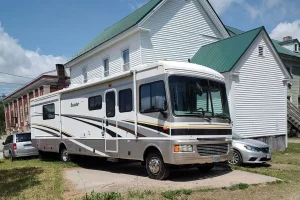
RV weight depends on several things, including its type, size, and how you use it. The weight of small camper vans starts at 3,000 pounds, whereas large motorhomes reach weights above 30,000 pounds. People new to the field often struggle with this wide range.
Here in this guide, you will find all about the weight range of RVs, how weight impacts driving, and how drivers should maintain safe weight limits.
What Is the Average Weight of an RV?
The average weight of an RV varies by category. A small RV is light and easy to manage. A large RV requires more power and experience to operate because it has a greater weight. The average teaches you how to plan and eliminate errors in your purchasing and renting activities.
Here is a quick summary:
| RV Type | Average Weight (lbs) |
| Class A Motorhome | 13,000 – 30,000+ |
| Class B Camper Van | 3,000 – 8,000 |
| Class C Motorhome | 10,000 – 15,000 |
| Travel Trailer | 3,000 – 10,000 |
| Fifth Wheel | 7,000 – 20,000 |
Different RV Classes and Their Weight Range
RV classes come in different sizes and weights. Different weights and widths of an RV offer different levels of space, comfort, and driving ease. The differences between RVs should be understood because they assist you in selecting the best RV which matches your personal needs and travel preferences.
Class A Motorhomes
The largest RVs that exist today reach their maximum size in Class A motorhomes. The vehicles have a bus-like appearance and provide passengers with maximum interior space and high-end amenities. They start with a weight of 13000 pounds and can increase beyond 30000 pounds. The vehicles serve as optimal solutions for both extended travel and permanent residency. These vehicles need larger road space. They also consume higher amounts of fuel.
Class B Camper Vans
These vehicles represent the smallest motorized RVs. The company uses van chassis to create their products. The weight of the product falls between 3,000 and 8,000 pounds. The vehicle provides drivers with simple operation for both driving and parking. Many beginners prefer them because they feel similar to driving a regular car. These vehicles provide limited interior space, which results in little storage room for extended travel.
Class C Motorhomes
The vehicles exist between Class A and Class B. Most vehicles include a sleeping space located above the main seating area. The weight of the item falls between 10,000 and 15,000 pounds. The system provides users with both comfortable experience and manageable controls. Families use this vehicle type for road trips mostly. Because it delivers sufficient space and remains simple to operate.
Travel Trailer and Fifth Wheel RV Weight Explained
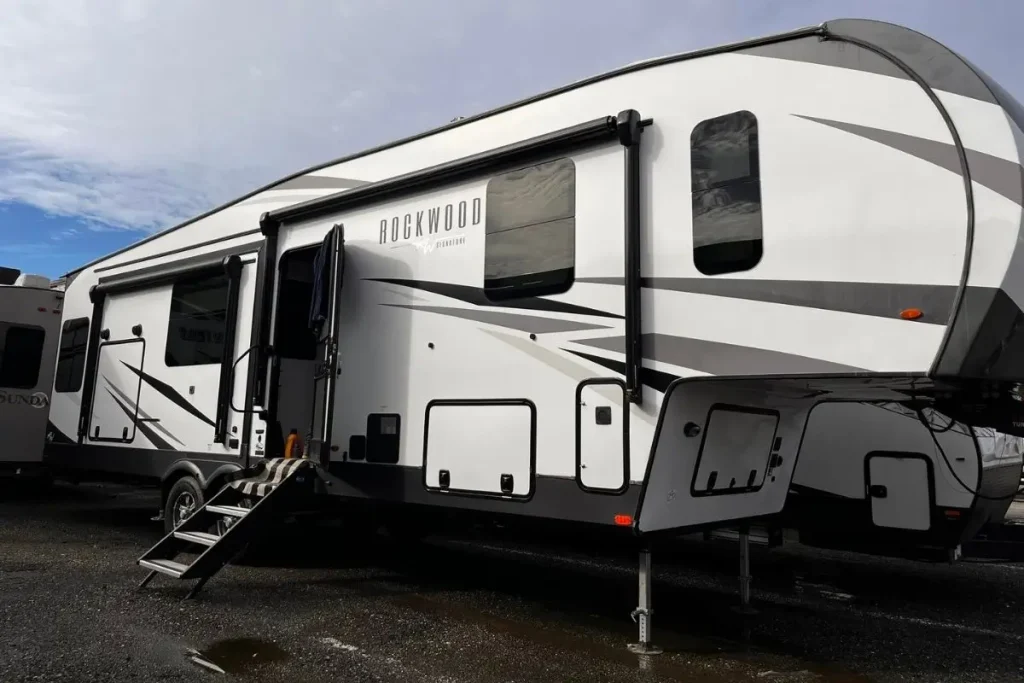
Travel trailers and fifth wheels are the two most popular towable RVs. These two varieties differ in weight, towing method, and level of comfort.
Travel trailers:
Many beginners use this trailer type because it provides easy towing behind a vehicle through its weight range of 3000 to 10000 pounds. Smaller trailers are easier to tow and park. The larger trailers provide extra living space but need a more powerful towing vehicle. Motorhomes cost more than these vehicles because they provide extra benefits.
Fifth wheel:
These RVs have a larger size and heavier weight compared to other models. The vehicle connects to a hitch that sits in the bed of a pickup truck. The weight of the object falls between 7000 and 20000 pounds. The system creates stable conditions that help with towing operations. It delivers extensive interior space, which supports extended travel and permanent residency.
What Is GVWR and Why Is It Important
GVWR is the maximum weight which your RV can safely carry. It includes all vehicle components with passenger weight, cargo, water, and fuel. The manufacturer establishes this limit as their official design specification. The RV needs this number because it protects against operational issues and potential hazardous events. You must verify this rating before you start loading your vehicle.
RVs that operate beyond their GVWR create additional stress on their brakes and tires and suspension systems. This makes it more difficult to control the vehicle because the stopping distance becomes longer. Emergency situations become extremely dangerous because of this situation. The RV remains stable when drivers stay within operational limits, which makes highway driving and turning easier.
Most areas impose fines and penalties on drivers who exceed established weight limits. Insurance companies may deny coverage for damages that occur during overloaded accidents. This situation can lead to significant financial damage. You can maintain legal compliance and protect your insurance coverage by following GVWR guidelines.
Weight of Cargo Compared to Total Weight
Total RV weight also depends on the cargo that people need to transport. Many beginners underestimate how quickly weight adds up. The combination of small items creates a significant impact. Such as:
- Clothes, food, and cooking items increase weight
- Camping gear and tools add extra load
- Water tanks can add hundreds of pounds
- Fuel also contributes to overall weight
- Bedding, pillows, and blankets add up over time
- Kitchen appliances like microwaves add weight
- Extra propane tanks increase total load
- Outdoor gear or sports equipment can be heavy
- Generators and power stations add significant weight
- Toolkits and repair items are often heavier than expected
- Storage boxes and organizers also contribute to weight
For example, one gallon of water weighs about 8.3 pounds. A 50-gallon tank adds over 400 pounds. The increase contains two significant parts. The process pushes your RV toward its weight limit. You should maintain complete knowledge about all your packed items.
Towing Capacity vs Different RV Weights
Towing capacity defines the maximum weight that your vehicle can pull without risk of damage. The requirement must match. The RV becomes unsafe when its weight exceeds the towing capacity. The engine will also experience excessive pressure. The situation creates a higher risk of accidents.
Always leave a little extra room for safety. Do not push your vehicle to its maximum limit. Here is a simple explanation that will help you figure out:
| Weight Type | What It Means | Simple Formula |
| Dry Weight (UVW) | RV without cargo or fluids | Base RV weight |
| GVWR | Max safe total weight | Dry Weight + Cargo + Fluids |
| CCC | How much you can add | GVWR − Dry Weight |
| NCC | Older term for cargo capacity | GVWR − UVW |
| Loaded Weight | Actual travel weight | Dry Weight + Everything inside |
| Tongue/Pin Weight | Weight on hitch | 10–25% of trailer weight |
| Water Weight | Weight of water | Gallons × 8.3 lbs |
| Fuel Weight | Weight of fuel | Gallons × fuel weight per gallon |
| Hitch Weight | Max hitch support limit | Set by manufacturer |
How to Find Your RV’s Exact Weight
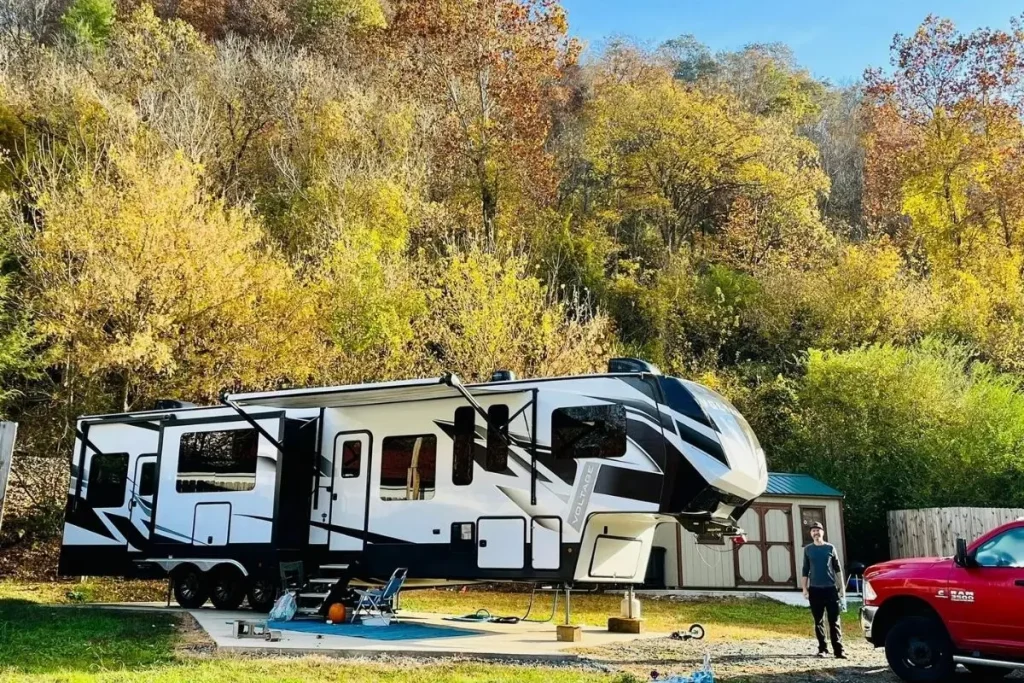
It’s crucial to know the precise weight of your RV in order to travel safely and smoothly. It helps you not overload your RV.
The basic formula is:
Total RV Weight = Unloaded Vehicle Weight (UVW) + Fresh Water Weight + Propane Weight + Cargo/Gear + Passenger Weight + Dealer-Installed Options
But the only way to get a 100% accurate total weight is to use a certified scale. Here are some useful ways to check your RV weight:
- Check manufacturer labels with key details or guides for recommended weighing practices and limits.
- Use a truck weigh station to get an accurate reading of your RV’s full loaded weight.
- Weighing each axle gives better accuracy, as it shows how weight is distributed.
- Homeowners can weigh their RVs by using portable RV scales, or they can go to RV dealerships, which provide weighing services.
- Drivers should use smart towing systems that monitor their vehicle weight and load balance during travel.
- Check tire pressure monitoring systems that hint at uneven weight distribution across your RV.
- Measure tongue weight separately for travel trailers to ensure safe towing balance.
- Ask service centers to include weight checks during regular maintenance visits.
- Use public dump stations with scales to check weight after filling or emptying tanks.
- Track weight changes after adding upgrades like solar panels or extra batteries.
- Keep a written log of cargo weight to estimate total load over time.
- Use professional RV inspection services that include detailed weight analysis.
What Happens If You Exceed RV Weight Limits
Exceeding your RV’s weight limit can create major difficulties. The situation impacts three areas: safety and performance and legal compliance. Here is what can happen if your RV is overloaded:
- Reduced braking ability: The added weight makes quick stopping more difficult. The situation increases accident danger and becomes worse during emergencies.
- Tire damage or blowouts: Overloaded tires experience faster wear, which leads to overheating. This condition results in dangerous road blowouts.
- Poor handling and control: An overweight RV becomes more difficult to operate. The vehicle becomes more unstable when driving at high speeds during strong winds.
- Damage to engine and transmission: Excess weight causes additional engine damage. The situation results in expensive repair needs and leads to engine failures.
- Lower fuel efficiency: The engine must work harder because of heavier loads. Your fuel consumption during travel will increase.
- Legal and safety issues: Driving an overweight RV can break road safety laws. You may face fines or penalties if checked at weigh stations.
- Suspension system damage: Excess weight puts pressure on the suspension components. The condition causes suspension components to wear out and sag, which reduces ride comfort.
- Frame and structural stress: Excess weight creates stress on the frame components that leads to damage. The excessive weight stress will cause cracks that result in background structural damage.
Tips to Keep Your RV Weight Under Control
The safe and smooth operation of your RV requires you to maintain its weight within recommended limits. The process of maintaining your weight under control results in better vehicle protection and enhanced driving experiences.
Pack Only What You Need
You should avoid carrying items that you do not need. Many beginners overpack for emergency situations. You should begin by selecting important items that serve multiple purposes. The process of maintaining low mass and minimal clutter results in a balanced weight. The fuel efficiency of the RV improves, which makes it simpler to operate during lengthy drives and on difficult terrain.
Monitor Water Levels
Water is one of the heaviest things in an RV. You should only bring very minimal water supplies that you will need during your journey. You should fill your tanks at the nearest stations when you reach your destination. Your towing experience will improve through the use of empty or partially filled tanks, which can reduce your weight by several hundred pounds.
Distribute Weight Evenly
You should store heavy items within your RV at its central section. It lies above its floor level. You should avoid placing excessive weight within a single location. The proper weight distribution between different areas of a vehicle leads to better control and reduced sideways motion. It protects both the wheels and the suspension components. It also helps to achieve safe driving and smooth operation.
Check Tire Pressure Regularly
The tires of your RV carry its entire weight. The tires will overheat and collapse under heavy weight when they have low air pressure. Check pressure before every trip. Vehicle safety and fuel efficiency and tire longevity all improve through correct tire pressure maintenance. The habit needs little effort yet produces significant results.
Remove Unnecessary Items Often
You should check your storage space before each journey. You should take away items that you did not use during your previous trip. The process helps maintain your RV at a light weight while maintaining its organized state. The reduction of unnecessary items brings about better vehicle handling. It leads to improved fuel efficiency and easier driving conditions.
Conclusion
The safety, comfort level, and performance capability of RVs all depend on their weight. Keeping track of the key terms GVWR and towing capacity creates a system that helps you prevent expensive errors. You can travel without worries by monitoring your items and maintaining your cargo limits. A well-balanced RV makes driving safer, easier, and more enjoyable!
Frequently Asked Questions
What is the heaviest type of RV?
Class A motorhomes are the largest. They can sometimes weigh over 30,000 lbs fully loaded.
Does RV weight include water and gear?
Of course, it includes water, fuel, and cargo and passengers. Always double-check your RV’s max takeoff weight.
Can RV weight affect fuel usage?
Yes. Heavier RVs burn more fuel while lighter weight improves gas mileage.
Is it safe to drive an overweight RV?
No, it is not. It could be unsafe and may damage your RV, adding to the chances of an accident occurring.